Agriculture Is Changing: How Technology Is Redefining the Future of Farming


From smarter irrigation and precision agriculture to nanobubble technology and advanced livestock management, farmers are discovering that the future of agricultural productivity lies not simply in using more resources, but in making every resource work harder.
Agriculture is entering a new era.
Across the world, farmers are facing a combination of challenges that would have been difficult to imagine just a generation ago. Water availability is becoming increasingly unpredictable. Input costs continue to place pressure on margins. Soil degradation, changing weather patterns and rising food demand are forcing agricultural businesses to reconsider how they operate.
At the same time, expectations are changing. Farmers are being asked to produce more, maintain quality, improve efficiency and reduce their environmental footprint, often with fewer resources.
The traditional approach to farming is evolving.
Increasingly, successful agricultural operations are looking beyond conventional farming methods and embracing technology, scientific research and smarter resource management to improve performance. Precision agriculture, automated irrigation, soil monitoring, biological treatments, advanced water management and artificial intelligence are becoming part of a much broader transformation.
But one of the most interesting developments is happening in an area that has always been fundamental to farming: water.
And it is changing the way we think about agricultural production.
The New Agricultural Equation: More Productivity, Fewer Resources
For generations, agricultural productivity has largely been associated with land availability, rainfall, fertiliser application, irrigation capacity and crop selection.
These fundamentals remain important. However, farmers are increasingly recognising that simply adding more water, fertiliser or other inputs does not necessarily translate into better results.
The real opportunity lies in improving the efficiency of the entire growing and production environment.
Consider irrigation. Water is one of agriculture's most valuable resources, yet the volume of water applied does not always reflect how effectively it is being used by the plant.
Water quality, dissolved oxygen, soil structure, root-zone conditions, microbial activity and nutrient availability all influence how effectively crops can utilise the water and nutrients supplied to them.
A farmer might invest in sophisticated irrigation infrastructure, carefully manage fertiliser programmes and optimise planting schedules, but still experience disappointing results because the underlying conditions within the root zone are not optimal.
This is where agricultural innovation is beginning to take a different direction.
Rather than focusing exclusively on how much water is delivered, attention is shifting towards the quality and functionality of that water, and how it interacts with the soil and plant.
Precision Agriculture Is Changing the Way Farmers Think
Technology is no longer something reserved for the largest commercial farming operations.
Digital soil sensors, satellite imagery, drone monitoring, automated irrigation systems, climate data and precision nutrient management are allowing farmers to make increasingly informed decisions.
These technologies are helping agricultural businesses understand:
Where water is needed and where it is being wasted.
How soil moisture and temperature influence crop development.
Whether nutrients are being effectively absorbed.
How environmental conditions affect plant stress.
Where crop performance is declining and why.
How irrigation and fertiliser programmes can be adjusted to improve productivity.
The result is a transition from reactive farming towards more predictive and data-led agricultural management.
However, monitoring and measuring performance is only part of the equation. The next step is using technology to actively improve the conditions in which crops grow.
This is where innovations in water treatment, biological processes and root-zone management become particularly interesting.
Water Is More Than an Irrigation Input
One of the most significant opportunities in modern agriculture is a better understanding of water itself.
Water is not simply a delivery mechanism for moisture. It plays an essential role in nutrient transport, plant metabolism, soil biology and the overall functioning of the root environment.
Dissolved oxygen, in particular, is an important but sometimes overlooked factor.
Plant roots require oxygen for cellular respiration, the process through which they generate the energy needed for growth, nutrient uptake and other essential functions.
When soil becomes saturated, compacted or poorly aerated, oxygen availability can decline. This can restrict root respiration, affect nutrient uptake and create conditions that favour certain undesirable microorganisms.
In intensive agricultural systems, hydroponics, greenhouse production and irrigated crops, managing oxygen availability in water and around the root zone can therefore be particularly important.
Traditional aeration methods have been used for many years to introduce oxygen into water. However, emerging technologies are providing alternative approaches to improving gas transfer and maintaining dissolved oxygen levels.
One of the most promising is nanobubble technology.
Nanobubbles: A New Dimension in Agricultural Water Management
Nanobubble technology is attracting growing interest across agriculture and horticulture because of its potential to improve the way irrigation water interacts with the growing environment.

Nanobubbles are extremely small gas-filled bubbles, generally measured in nanometres. Unlike conventional bubbles, which rise relatively quickly and escape from the water, nanobubbles exhibit distinctive physical properties that can allow them to remain dispersed in water for extended periods.
Depending on the gas used, the generation technology and the application, nanobubbles can influence dissolved gas concentrations and the physical and chemical behaviour of water.
In agricultural applications, oxygen nanobubbles are particularly interesting.
By introducing oxygen into irrigation water in a highly dispersed form, nanobubble systems can help increase dissolved oxygen availability and support improved oxygen conditions within the root zone.
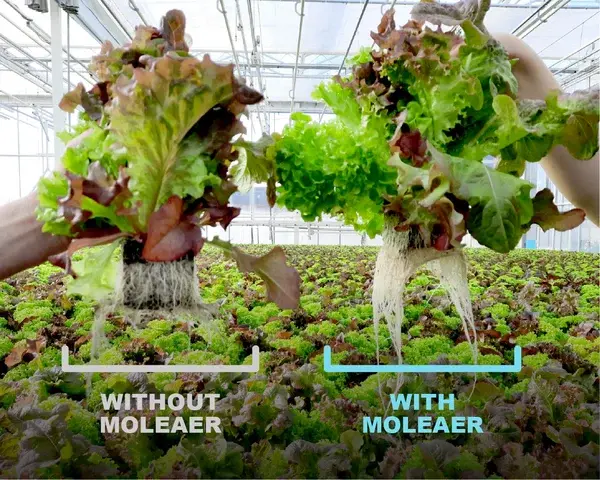
This has several potential implications for agricultural performance.
1. Improved root-zone oxygen availability
Healthy roots are fundamental to healthy plants.
Oxygen plays a critical role in root respiration and the metabolic processes that support root development. Improving oxygen availability in the root environment may help create more favourable conditions for root growth and function.
A healthier root system can provide a stronger foundation for water and nutrient uptake.
2. Improved nutrient availability and uptake
The relationship between oxygen, soil microorganisms, nutrient cycling and plant roots is complex.
Adequate oxygen availability can support aerobic microbial activity and influence biological processes involved in nutrient transformations.
Under suitable conditions, improved root-zone oxygenation may contribute to more effective nutrient utilisation.
The objective is not necessarily to apply more fertiliser, but to improve the conditions that allow plants to make better use of the nutrients already available.
3. Supporting healthier root environments
Root health is one of the most important determinants of crop performance.
In intensive growing environments, water quality and microbial conditions can influence the development of root-related diseases and other challenges.
Research and commercial growing trials have investigated the potential of nanobubble-enriched irrigation water to improve root development and help manage certain undesirable microorganisms.
Results vary depending on the crop, growing conditions, gas type and treatment configuration, but the potential is attracting increasing attention.
4. Improving water-use efficiency
Water efficiency is becoming an increasingly important measure of agricultural performance.
The objective is to produce more marketable output from every unit of water used.
Research into nanobubble applications in agriculture has reported promising results in controlled growing environments, including studies investigating water savings in lettuce production.
These results demonstrate the importance of exploring how water treatment technologies can contribute to more efficient agricultural production. However, outcomes depend on the crop, growing environment and treatment conditions.
5. Supporting irrigation infrastructure
Nanobubble technology is also being investigated for its potential role in managing irrigation water quality and reducing certain forms of emitter clogging associated with biofilms, organic material and sediment.
This is particularly relevant to drip irrigation systems, where blockages and uneven water distribution can undermine irrigation efficiency and increase maintenance requirements.
The opportunity extends beyond the plant itself to the wider irrigation system.
Beyond Crops: The Role of Technology in Animal Husbandry
Agriculture is not only changing in the fields. Livestock farming and animal husbandry are also experiencing a shift towards more technology-driven approaches to animal health, welfare, productivity and resource management.

From dairy and beef production to poultry, pigs and aquaculture, farmers are increasingly recognising that the quality of the environment in which animals are raised has a direct influence on their health and performance.
Water is central to this equation.
Clean, accessible drinking water is fundamental to livestock health. Water quality, microbial contamination, temperature and availability can all influence water consumption, animal wellbeing and production outcomes. Yet water management on many farms remains an area with considerable scope for improvement.
New technologies are creating opportunities to address these challenges.
Improving water quality and management
Nanobubble technology is attracting interest in livestock operations because of its potential applications in water treatment and management.
Oxygen nanobubbles can increase dissolved oxygen availability in water, while other gas configurations may offer different treatment characteristics. Depending on the application and system design, nanobubble technology can be investigated as part of broader water management programmes.
For livestock operations, potential areas of application include:
Drinking water management: Investigating how nanobubble technology can contribute to improved water quality and the management of certain microbial challenges.
Livestock housing and environmental management: Exploring applications in water treatment, cleaning systems and the management of organic waste streams.
Dairy operations: Supporting the management of water used in livestock facilities and associated cleaning and treatment processes.
Poultry and pig farming: Investigating opportunities to improve water management and hygiene within intensive production environments.
Wastewater management: Exploring the use of advanced aeration and biological treatment approaches in the management of livestock effluent and agricultural wastewater.
A healthier environment, better-managed resources
The opportunity extends beyond drinking water.
Intensive livestock operations generate significant volumes of wastewater and organic waste. Managing these streams effectively is essential for environmental compliance, responsible water use and the protection of surrounding ecosystems.
Advanced aeration, biological treatment and water management technologies can play an important role in improving the treatment of these waste streams.
Nanobubble technology, particularly when integrated into appropriately designed treatment systems, offers an additional tool worth investigating.
Ultimately, the objective is the same as in crop production: to improve the conditions in which agricultural operations function, make more effective use of available resources and reduce unnecessary environmental pressure.
The future of animal husbandry will increasingly depend on integrating animal welfare, water quality, environmental management and technological innovation into a more holistic approach to agricultural production.
From Research to Real-World Agriculture
What makes nanobubble technology particularly interesting is that its application is no longer limited to laboratory research.
Growers and agricultural research organisations across different regions are investigating and deploying the technology in commercial and controlled growing environments.
Examples include:
Leafy greens and hydroponics
Commercial growers have investigated the use of nanobubble systems to improve dissolved oxygen conditions, root health and production consistency.
Strawberries
Research and commercial trials have explored the relationship between oxygen-enriched irrigation water, root development and the management of root-related pathogens.
Avocados and other orchard crops
Growers in countries such as Chile have investigated nanobubble-enriched irrigation water to improve root development, crop quality and productivity.
Tomatoes, cucumbers and peppers
Agricultural trials have explored how nanobubbles may influence root-zone health, nutrient uptake, crop quality and overall growing performance.
These examples illustrate an expanding area of agricultural innovation. They also demonstrate that the technology is being considered across different production systems, from intensive greenhouse operations to established orchard environments.
Importantly, results should be evaluated within the context of each individual crop, water source, soil type and irrigation system.
There is no single technology that solves every agricultural challenge. The value lies in understanding where it can make a measurable difference.
The Importance of Integrating Technologies
One of the biggest mistakes in agricultural innovation is treating individual technologies as isolated solutions.
A new irrigation system cannot compensate for poor soil management. Improved oxygenation cannot resolve every nutrient deficiency. Precision monitoring cannot improve production unless the information is translated into effective management decisions.
The future of farming will depend increasingly on integration.
This means combining water management, soil science, biological processes, precision irrigation, nutrient management and environmental monitoring into a coherent agricultural strategy.
For example, a farmer experiencing declining crop performance might initially assume that additional fertiliser or irrigation is required.
However, a closer assessment could reveal a combination of underlying issues:
Poor soil aeration.
Reduced biological activity.
Inadequate water quality.
Salinity or nutrient imbalances.
Inefficient irrigation distribution.
Compromised root development.
Addressing these issues individually may produce limited results. Understanding how they interact can lead to a much more effective intervention.
This is why the future of agricultural innovation is not simply about adopting more technology. It is about applying the right technology to the right problem.
The South African Opportunity
For South Africa and the wider Sub-Saharan African region, this transition is particularly important.
Agriculture operates in an environment where water security, climate variability, soil conditions and input costs are significant considerations.
Farmers are increasingly required to achieve more with available water resources while maintaining commercially viable production.
Water-efficient agricultural practices are therefore not simply an environmental consideration. They are an economic necessity.
\
The opportunity extends across several agricultural sectors:
Commercial fruit and vegetable production.
Citrus, avocado and other high-value orchards.
Wine and table grape production.
Greenhouse and hydroponic farming.
Irrigated field crops.
Nurseries and plant propagation.
Dairy and beef production.
Poultry and pig farming.
Aquaculture and other water-intensive agricultural operations.
Technologies that improve irrigation water quality, support healthier root environments and enhance resource efficiency deserve serious consideration.
Nanobubble technology is one such opportunity.
However, adoption should be driven by evidence, not enthusiasm. Local trials, baseline measurements, appropriate system design and ongoing monitoring are essential to understanding the actual benefits and commercial viability of any intervention.
South African farmers have an opportunity to be part of this next phase of agricultural innovation rather than simply waiting for technologies to become mainstream elsewhere.
The Future Belongs to Smarter Farming
Agriculture is not changing because traditional farming knowledge has become irrelevant.
Quite the opposite.
The most successful agricultural businesses will be those that combine generations of practical farming experience with advances in science, technology and environmental understanding.
The future is not about replacing farmers with technology. It is about giving farmers better tools, better information and more effective ways to manage increasingly complex growing and production environments.
Nanobubbles are an interesting example of how relatively new technologies can open up new possibilities in areas as fundamental as water.
Their potential applications in irrigation, root-zone oxygenation, nutrient utilisation, livestock water management and wastewater treatment are attracting increasing scientific and commercial attention.
But perhaps the most important shift is the thinking behind their adoption.
Farmers are beginning to look beyond the quantity of resources they apply and focus more closely on how effectively those resources perform.
How can water work harder? How can roots function better? How can existing nutrients be used more efficiently? How can soil biology be supported? How can livestock environments be improved? And how can production become more resilient without continually increasing inputs?
These are the questions that will shape the next generation of agriculture.
Agriculture is changing. The opportunity is no longer just to grow more. It is to grow smarter, manage better and produce more sustainably.
About Blueplanet South Africa
Blueplanet South Africa works at the intersection of environmental biotechnology, water management and applied biological science.
Through its Bionomics Approach, the business focuses on understanding the interactions between biological, chemical and physical processes to develop practical, site-specific solutions.
As agricultural businesses explore new ways to improve water quality, soil health, livestock environments and growing performance, Blue Planet South Africa believes that the integration of emerging technologies, including nanobubble systems, will play an increasingly important role in the future of sustainable agricultural production.
A Final Perspective: The Next Agricultural Revolution
Agriculture has always evolved through innovation. From mechanisation and modern irrigation to biotechnology and precision farming, each generation has found new ways to overcome limitations and improve production.
But the next agricultural revolution may be different. It is not simply about bigger machinery, more sophisticated equipment or increasing the volume of inputs. It is about understanding the science behind the systems that sustain life and using that knowledge to fundamentally rethink how we grow food, manage water, maintain soil health and raise livestock.
Technologies such as nanobubbles are an example of this shift. They challenge conventional thinking about something as fundamental as water and demonstrate how seemingly small advances in science can open up much bigger possibilities.
The real opportunity lies in connecting these innovations, testing them rigorously and translating scientific potential into measurable agricultural outcomes.
Perhaps the most important question facing agriculture today is not how much more we can produce with the resources we have, but how much more intelligently we can use them.
The farmers who recognise that distinction may well be the ones shaping the future of the industry.
Reach out to a specialist at Blueplanet to find out how we can support you with your farming needs.
There is so much research that supports how effective nanobubbles are for various farming needs. Here are some for further reading....
1. 2026 Agricultural Water Management review: A systematic review of micro- and nanobubble technology found growing research interest in agricultural applications, including water-use efficiency, root-zone aeration and irrigation management. It also identifies energy consumption and standardisation as challenges.
2. 2026 lettuce research: A study published in Agricultural Water Management reported water savings of approximately 23% with moderately diluted oxygen nanobubbles and 21% with particular carbon dioxide nanobubble treatments. This is a particularly useful scientific reference for the article.
3. Moleaer agricultural case studies: There are examples involving avocados, strawberries, leafy greens, tomatoes, cucumbers, peppers and other crops. These provide a useful starting point for further evidence and case-study content.
Nanobubble Technology
4. 2025 drip irrigation research: Research has also examined the role of micro-nanobubbles in reducing irrigation emitter clogging and improving irrigation uniformity.


