BLUE PLANET SOUTH AFRICA COASTAL BIODIVERSITY RESEARCH REPORT • OCTOBER 2026
The Future of Blue Carbon in South Africa
Exploring how mangrove restoration can support national climate targets and protect marine ecosystems

Research focus: Blue carbon, mangrove restoration, coastal biodiversity, climate resilience and nature-based solutions.
Executive summary
South Africa's coastline represents an important natural asset, supporting marine biodiversity, estuarine ecosystems, fisheries, coastal livelihoods and economic activity. However, these interconnected environments face increasing pressure from habitat degradation, pollution, altered freshwater flows, coastal development and climate change.
One opportunity attracting growing scientific and environmental interest is blue carbon — the carbon captured and stored by coastal and marine ecosystems, particularly mangrove forests, salt marshes and seagrass meadows.
These ecosystems play a dual role. They contribute to climate mitigation through carbon storage while supporting biodiversity, stabilising sediments and maintaining important ecological processes. Their protection and restoration can also contribute to climate adaptation by strengthening the resilience of suitable coastal environments.
Mangroves are especially significant because carbon can accumulate not only in their trunks, branches and roots, but also in the waterlogged sediments beneath them. Where these environments remain intact, sediment carbon can persist for long periods. Conversely, disturbance can reduce their capacity to store carbon and may release some of the carbon already held in the ecosystem. https://pubmed.ncbi.nlm.nih.gov/36375557/ https://besjournals.onlinelibrary.wiley.com/doi/full/10.1111/1365-2745.14020?utm_source=chatgpt.com
For South Africa, the opportunity is particularly relevant because its mangrove forests occur in a relatively limited number of sheltered estuaries along the east coast. Research has documented habitat losses, continuing pressures on existing forests and the importance of estuary conditions in determining whether mangroves can persist and regenerate.
- https://www.sciencedirect.com/science/article/pii/S0272771419311953?utm_source=chatgpt.com https://link.springer.com/article/10.1007/s13157-026-02051-w?utm_source=chatgpt.com
This report examines the science behind blue carbon, the condition of South Africa's mangrove ecosystems, the relationship between restoration and national climate objectives, and the practical considerations involved in developing credible coastal restoration programmes.
It also explores how an integrated environmental philosophy — such as the Bionomics Approach — could help inform restoration planning by considering water quality, sediment, hydrology, biological processes and ecosystem function together.
The central conclusion is that successful coastal restoration must be measured by ecological recovery and demonstrable environmental outcomes, not simply by the number of trees planted.
1. Understanding blue carbon

mnhn.fr - credit photo - Mangroves de Nouvelle-Calédonie et de Wallis
© Sylvain Corbel
Blue carbon describes carbon captured from the atmosphere and stored in coastal and marine ecosystems. The term is most commonly associated with three habitat types: mangroves, salt marshes and seagrass meadows.
Although these ecosystems differ in structure and location, each can contribute to carbon storage while supporting important ecological functions.
1.1 Mangrove forests
Mangroves are salt-tolerant trees and shrubs that occupy sheltered tropical and subtropical coastal environments, particularly estuaries and tidal shorelines.
Their root systems help stabilise sediments, provide habitat for fish and invertebrates, and trap organic material. Carbon is stored in the living vegetation and, often substantially, in the sediments beneath the forest.
South Africa's mangroves are concentrated along the east coast, where local estuary conditions provide suitable habitat. Their limited and fragmented distribution makes the protection of existing forests especially important.
https://www.sciencedirect.com/science/article/pii/S0272771419311953?utm_source=chatgpt.com https://www.sciencedirect.com/science/article/abs/pii/S0272771419300502?utm_source=chatgpt.com
1.2 Salt marshes
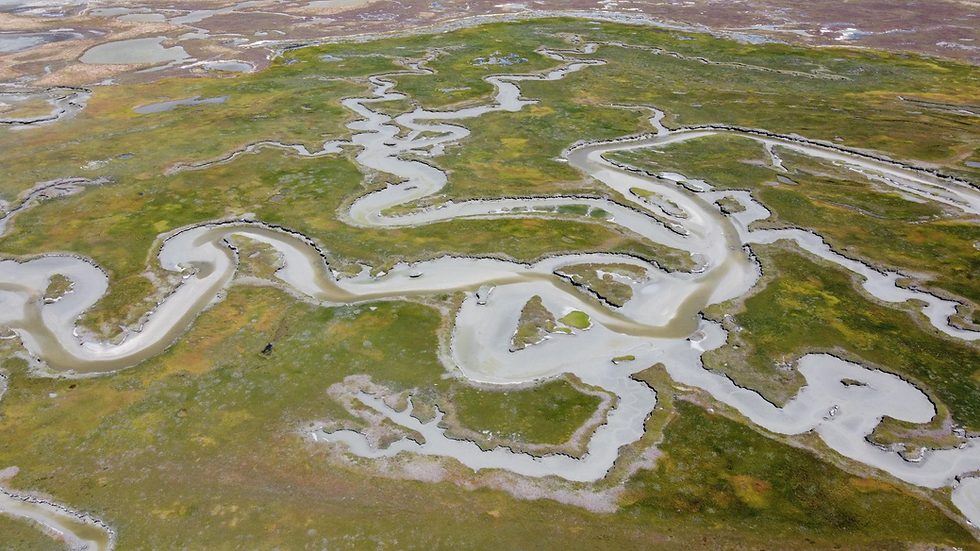
Salt marshes are intertidal wetlands dominated by salt-tolerant grasses and other plants. Their vegetation captures carbon, while waterlogged soils can accumulate organic matter.
Beyond carbon storage, salt marshes provide feeding and breeding habitat for wildlife, help stabilise sediments and contribute to estuarine water and nutrient cycling.
Their conservation is important in its own right. Restoring mangroves should never come at the expense of naturally occurring salt marshes or other valuable coastal habitats.
1.3 Seagrass meadows

Seagrasses are flowering plants that grow underwater in suitable shallow marine and estuarine environments. Their leaves provide shelter and feeding habitat, while their roots and rhizomes stabilise sediment.
Seagrass meadows can accumulate carbon in their sediments and support marine food webs. Their protection therefore contributes to both biodiversity conservation and the broader blue carbon opportunity.
Why these ecosystems matter together
A national blue carbon strategy should not focus exclusively on mangroves. Mangroves, salt marshes and seagrasses represent complementary habitats, and their distribution and restoration potential depend on different environmental conditions.
A national assessment published in 2023 provided estimates of carbon stocks and historical habitat change across all three ecosystem types in South Africa. It highlighted the importance of considering both existing carbon storage and the potential benefits of restoration.
https://www.sciencedirect.com/science/article/abs/pii/S0048969722072424?utm_source=chatgpt.com https://pubmed.ncbi.nlm.nih.gov/36375557/
2. The scientific case for protecting and restoring blue carbon ecosystems
South Africa's blue carbon ecosystems occupy a relatively small area compared with terrestrial landscapes, but their carbon storage capacity and wider ecological benefits make them significant.
A national assessment by Raw and colleagues, published in Science of the Total Environment in 2023, estimated that the country's mangroves, salt marshes and seagrasses covered a combined 18,554 hectares in the datasets analysed. The study estimated that approximately 6,500 hectares — 26% of the historical natural extent — had been lost since 1930.
The research estimated carbon stocks per hectare as follows:

The study estimated that salt marshes accounted for approximately 67% of the national carbon stock across the three ecosystem types, reflecting their much greater total area. It also identified potential restoration opportunities that could increase carbon sequestration and removals.
These findings have three important implications.
First, the protection of existing habitats matters because degradation can reduce future carbon uptake and release some stored carbon.
Second, restoration could rebuild carbon stocks over time, but the benefits depend on the condition of the site, the success of restoration and the duration of monitoring.
Third, climate strategy should consider all three blue carbon habitats rather than concentrating exclusively on mangroves.
3. Why mangrove restoration matters

Mangrove restoration is attracting attention because it can support several environmental objectives at the same time. Its value is greatest when restoration addresses the ecological processes that sustain the forest rather than treating tree cover as the only measure of success.
3.1 Climate mitigation and carbon storage
Mangroves capture atmospheric carbon dioxide through photosynthesis and store carbon in their vegetation and sediments.
The national assessment discussed above estimated mangrove ecosystem carbon stocks of 253–534 Mg C/ha. These are estimates of existing carbon held in ecosystems, not a promise of the amount that a new project would remove from the atmosphere.
Restoration can contribute to rebuilding carbon stocks where ecological conditions support successful establishment and long-term growth. Protecting intact mangroves is equally important because the loss of established forests and disturbance of their sediments may compromise existing stores.
3.2 Marine and estuarine biodiversity

Mangrove root systems create complex habitat structures that shelter juvenile fish, crustaceans and other organisms. Mangrove ecosystems also interact with adjacent mudflats, salt marshes, tidal channels and coastal waters.
These connections support feeding, breeding and nursery functions for a range of species.
However, biodiversity outcomes depend on the wider ecological setting. Mangrove planting alone will not restore a damaged food web if water quality, sediment conditions or hydrological processes remain unsuitable.
3.3 Natural coastal protection
Mangrove vegetation can reduce wave energy, trap sediments and help stabilise shorelines under appropriate conditions. These functions may contribute to coastal resilience and complement other adaptation measures.
The extent of protection depends on factors such as forest width, vegetation density, water depth, wave conditions and coastal geomorphology. Mangroves cannot be assumed to prevent all flooding, erosion or storm damage.
3.4 Water quality and ecological function
Mangroves can retain some sediments and associated pollutants, while root-zone processes influence nutrient cycling and organic matter decomposition.
These functions are site-dependent. Mangroves should not be treated as a substitute for wastewater treatment, industrial pollution control or remediation of contaminated sediments.
Where pollution is limiting ecosystem recovery, source control and appropriate environmental treatment may need to form part of a wider restoration programme.
3.5 Community and economic benefits
Healthy coastal ecosystems can support fisheries, tourism, education, recreation and local livelihoods. Their degradation may create costs for communities, businesses and public authorities.
Restoration programmes can create opportunities for local participation, environmental monitoring and skills development, provided these activities are designed around local needs and realistic long-term funding.
The strongest restoration cases therefore consider climate benefits alongside biodiversity, coastal resilience, ecosystem services and social outcomes.
4. South Africa's mangrove ecosystems: a national opportunity
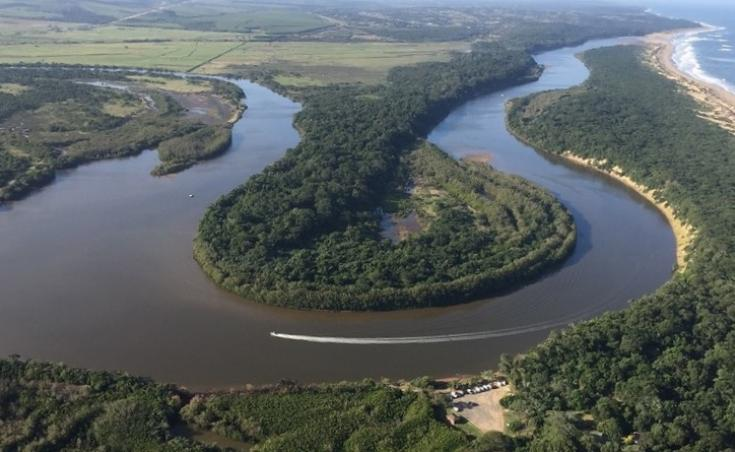
South Africa's mangroves occur at one of the most southerly limits of global mangrove distribution. The exposed, high-energy coastline restricts them largely to sheltered estuaries along the east coast. Their distribution is therefore shaped by estuary geomorphology, tidal conditions, sediment movement, freshwater flows and the availability of suitable habitat.
A 2020 study by Anusha Rajkaran and Janine Adams documented mangroves in 32 South African estuaries and identified losses associated with disturbance to catchments and estuary mouths. The study also highlighted pressures including wood harvesting, cattle browsing and extreme flooding events.
More recent research by Machite and colleagues, published in 2026, examined 17 Eastern Cape estuaries over the period 2011–2021. It reported a net increase of three hectares in mangrove cover during that period, alongside continuing degradation pressures, including harvesting, livestock browsing and trampling. The result illustrates why changes in total area alone are insufficient to assess ecosystem health.
4.1 KwaZulu-Natal
KwaZulu-Natal contains important mangrove forests, including those associated with the uMhlathuze Estuary and several smaller estuarine systems.
Research has identified both substantial existing mangrove habitat and losses from smaller estuaries. Restoration planning in the province should consider estuary condition, freshwater flows, mouth dynamics, sediment stability and local pressures before selecting sites.
4.2 Eastern Cape
The Eastern Cape is particularly relevant because mangroves occur near their southern distribution limit, where suitable habitat is restricted and local environmental conditions are important.
Research indicates that mangrove condition and natural regeneration can be affected by human disturbance, estuary-mouth conditions and the availability of suitable sedimentary habitat. These factors support a cautious, site-specific approach to restoration.
4.3 Estuaries and catchments
Mangrove health cannot be separated from the wider catchment and estuary system.
Changes in freshwater flow, infrastructure, water abstraction, sediment supply, water quality and estuary-mouth management can influence habitat suitability and biological recovery.
The Department of Water and Sanitation's estuary rehabilitation guidance identifies hydrology, geomorphology, water quality, habitat and biota as connected components of estuarine rehabilitation. Its framework emphasises diagnosis, planning, rehabilitation objectives, implementation and monitoring.
4.4 Protecting existing ecosystems
Restoration is not always the first or most effective intervention. Where healthy mangroves remain, protecting existing habitat and preventing further degradation may provide more immediate environmental value than attempting to establish new forests elsewhere.
A sound national strategy should therefore prioritise:
Protection of intact mangrove, salt marsh and seagrass habitats.
Identification and removal of pressures affecting natural regeneration.
Restoration of suitable degraded habitats.
Recovery of natural hydrological and sediment processes where feasible.
Long-term ecological and carbon monitoring.
5. Blue carbon and South Africa's climate targets
South Africa's second Nationally Determined Contribution (NDC), submitted under the Paris Agreement in October 2025, sets out the country's updated climate commitments and its direction towards a low-emissions, climate-resilient and socially just society.
Blue carbon ecosystems provide a potential nature-based contribution to this wider climate response. However, their role must be assessed carefully and incorporated into appropriate accounting and reporting systems.
Four ways restoration can contribute
1. Protecting carbon already stored
Conservation of intact ecosystems can help avoid losses from habitat destruction and sediment disturbance.
2. Rebuilding carbon stocks
Suitable restoration can support vegetation growth and carbon accumulation in biomass and sediment over time.
3. Strengthening climate resilience
Healthy coastal habitats can contribute to erosion management, habitat connectivity and the resilience of estuarine ecosystems.
4. Improving environmental accountability
Robust monitoring can help demonstrate measurable restoration outcomes and support relevant climate and biodiversity reporting.
From local restoration to national reporting
The 2023 national assessment highlighted that blue carbon ecosystems were not widely incorporated into national greenhouse gas inventories and recommended their inclusion in relevant climate response planning.
This makes accurate ecosystem mapping, carbon measurement and transparent reporting important priorities.
For a restoration programme to contribute credibly to climate targets, it must distinguish between existing carbon stocks, avoided emissions and additional carbon sequestration. These are different measures and should not be combined into a single unqualified carbon-benefit figure.
Restoration projects can support national climate objectives, but the contribution of any particular project depends on its design, evidence, accounting methodology and relationship to national reporting arrangements.
6. The role of an integrated, ecosystem-based restoration approach

An effective restoration programme begins by understanding why an ecosystem is degraded.
A mangrove forest may be declining because its tidal exchange has changed, its sediment has become unstable, pollution is affecting plant growth, or physical disturbance is preventing seedlings from establishing. Different causes require different interventions.
Planting additional trees without addressing these constraints may produce limited or temporary results.
The Department of Water and Sanitation's rehabilitation guidance reflects this principle through its phased approach to diagnosing impacts, defining objectives, implementing appropriate interventions and monitoring results.
Applying the Bionomics Approach to coastal restoration
The Bionomics Approach offers a framework for considering the relationships between biological systems and their wider environment. In a coastal setting, this means looking beyond individual species or visible symptoms and examining the processes that determine ecosystem health.
A potential restoration programme could incorporate the following stages.
01
Assess the ecosystem
Establish baseline conditions for water quality, hydrology, sediment, vegetation, biodiversity and existing carbon stocks.
02
Identify the causes of degradation
Determine whether the principal constraints relate to pollution, altered freshwater flows, sediment instability, habitat disturbance or other environmental pressures.
03
Develop a site-specific restoration plan
Set clear ecological objectives and identify interventions appropriate to the characteristics and limitations of the site.
04
Restore ecological processes
Address the underlying pressures, support natural regeneration where possible and implement planting or other restoration measures only where appropriate.
05
Monitor and evaluate recovery
Measure habitat condition, vegetation survival, natural recruitment, water quality and other relevant indicators against the baseline.
06
Adapt and report
Use monitoring evidence to refine interventions and report environmental outcomes transparently, including carbon benefits where they can be substantiated.
This framework is a proposed application of the Bionomics Approach to coastal biodiversity. It is not a substitute for specialist ecological assessment, statutory approvals or the involvement of qualified coastal and estuarine scientists.
Where water-quality problems or contamination are identified, appropriate source control and treatment may form part of the wider rehabilitation strategy. Technology selection should follow the evidence from the site assessment rather than precede it.
7. Potential restoration opportunities across South Africa

The following opportunities are proposed areas for investigation. Their feasibility would need to be established through site-specific studies, land access arrangements, stakeholder engagement and any required environmental authorisations.
Opportunity 1 — Protect and restore mangrove forests
Identify existing mangrove stands where degradation is affecting forest structure, natural regeneration or habitat quality.
Potential activities include assessing browsing and harvesting pressures, investigating hydrological constraints and supporting natural regeneration where conditions permit.
Potential outcomes: improved habitat condition, protection of existing carbon stocks and stronger prospects for long-term ecosystem recovery.
Opportunity 2 — Rehabilitate degraded estuaries
Investigate estuaries where altered freshwater flows, pollution, sediment movement or physical disturbance may be restricting ecological function.
Restoration could involve catchment-level interventions, water-quality improvements, sediment management or the recovery of natural hydrological processes, depending on the identified constraints.
Potential outcomes: improved estuarine function, healthier habitat and better conditions for mangrove or other native vegetation recovery.
Opportunity 3 — Develop integrated blue carbon projects
Assess the potential for protecting or restoring mangroves, salt marshes and seagrasses within a broader coastal biodiversity programme.
Each habitat should be assessed independently to determine its ecological condition, restoration potential, carbon characteristics and biodiversity value.
Potential outcomes: a more comprehensive coastal conservation strategy, with carbon and biodiversity benefits assessed across multiple ecosystem types.
Opportunity 4 — Address land-based pollution
Investigate catchment and estuarine pollution affecting sensitive coastal habitats. This may include wastewater discharges, industrial inputs, excessive nutrient loading or contaminated sediments.
The appropriate response will depend on the pollutant, its source, the receiving environment and the relevant regulatory requirements.
Potential outcomes: improved water quality and a stronger ecological foundation for restoration.
Opportunity 5 — Establish long-term monitoring programmes
Develop repeatable monitoring systems that track ecosystem condition over time, using appropriate field surveys, spatial data, water-quality sampling and carbon measurements.
Potential outcomes: stronger evidence for environmental decision-making, transparent reporting and the ability to adapt management as conditions change.
8. Carbon measurement, finance and verification
Blue carbon restoration can attract interest from organisations seeking to support climate mitigation and biodiversity conservation. However, a credible project needs a clear distinction between environmental improvement and the generation of verified carbon credits.
What needs to be measured?
Measurement area | What it establishes |
Habitat extent | The area of ecosystem protected or restored |
Biomass carbon | Carbon held in vegetation above and below ground |
Sediment carbon | Carbon stored in soils and sediments |
Carbon change over time | Whether carbon stocks are increasing or decreasing |
Biodiversity | Changes in relevant species, habitat quality and ecological function |
Water quality | Changes in environmental conditions affecting ecosystem health |
Restoration durability | Whether improvements persist and withstand environmental pressures |
Carbon assessment should follow an appropriate recognised methodology, with sampling designs and uncertainty estimates suited to the site.
Could restoration generate carbon credits?
Potentially, but not automatically.
A project seeking carbon credits generally needs to establish an appropriate baseline, demonstrate additional climate benefits, address permanence and reversal risks, consider leakage where relevant, and follow an eligible carbon methodology. Validation, verification and monitoring requirements will depend on the chosen standard.
The existing carbon stored in a mangrove forest is not equivalent to new carbon removal generated by a restoration project. Nor should projected sequestration be reported as an achieved outcome.
Potential financing pathways
Possible funding routes include:
Corporate environmental, social and governance programmes.
Biodiversity conservation and restoration funding.
Public-sector and research partnerships.
Philanthropic or grant funding.
Eligible climate-finance mechanisms.
Carbon-credit programmes, where the site and methodology meet the relevant requirements.
The business case should account for establishment costs, monitoring, maintenance, stakeholder participation, ecological risks and long-term management. Carbon-credit income should not be assumed before feasibility has been demonstrated.
9. Risks and limitations
Mangrove restoration offers meaningful opportunities, but it is not appropriate for every coastline or estuary. A scientifically credible programme must address the following considerations.
Ecological suitability
Mangroves should not be planted in naturally occurring salt marshes, seagrass meadows or other habitats simply to increase tree cover. Habitat selection must reflect the site's ecological history and suitability.
Hydrology and climate
Tidal exchange, freshwater flows, sediment movement, temperature and extreme weather can determine whether a restoration project succeeds.
Pollution and contamination
Planting vegetation will not resolve continuing pollution inputs or make contaminated sediments safe. Underlying causes must be addressed appropriately.
Carbon permanence and uncertainty
Storms, erosion, habitat loss and other disturbances may reverse some carbon gains. Carbon estimates require transparent assumptions and appropriate monitoring.
Community participation and governance
Land rights, local livelihoods, regulatory approvals, maintenance responsibilities and long-term funding need to be considered from the outset.
These considerations reinforce the need to prioritise ecosystem protection, sound assessment and long-term stewardship over planting targets alone. South African mangrove research has documented the effects of estuary disturbance, harvesting, livestock browsing and changing environmental conditions on mangrove extent and structure.
10. A proposed 12-month implementation roadmap
The following roadmap provides an indicative structure for developing and initiating a coastal restoration pilot. It is a proposed programme, not a claim that a project has already been commissioned or completed.
Months 1–3
Phase 1 — Research and site selection
Review available ecological data, identify potential pilot sites, consult relevant authorities and research partners, and undertake preliminary site assessments.
Months 4–6
Phase 2 — Baseline and feasibility
Establish baseline conditions, assess restoration constraints, define measurable objectives, determine regulatory requirements and prepare an implementation and monitoring plan.
Months 7–9
Phase 3 — Pilot implementation
Begin approved restoration measures at a suitable site, prioritising the removal of degradation pressures and the recovery of natural ecological processes.
Months 10–12
Phase 4 — Evaluation and next steps
Assess early performance indicators, document lessons learned, refine the intervention and prepare a longer-term management and funding plan.
A 12-month programme can establish a baseline, initiate suitable interventions and measure early progress. It cannot, on its own, demonstrate mature forest carbon stocks or long-term permanence. Ecological recovery and carbon monitoring should continue over subsequent years.
PART II — BLUE PLANET SOUTH AFRICA OVERVIEW

11. Our perspective: restoring the systems that sustain life
At Blue Planet South Africa, we recognise that environmental challenges rarely exist in isolation. The health of a coastal ecosystem is influenced by the quality of its water, the condition of its sediment, the movement of freshwater, biological processes and the wider environment in which it exists.
The research presented in this report highlights an important principle: successful restoration requires more than addressing the visible symptoms of environmental degradation. It requires an understanding of the underlying conditions that determine whether an ecosystem can recover and sustain itself.
We believe this systems-based perspective is essential to the future of coastal biodiversity and blue carbon in South Africa.
Mangrove restoration provides a clear example. Planting trees may form part of an intervention, but lasting recovery depends on suitable hydrology, sediment stability, water quality, natural regeneration and protection from continuing disturbance.
Our interest is therefore in an integrated approach to environmental restoration — one that considers the whole ecosystem, identifies the causes of degradation and supports interventions designed around measurable outcomes.
The Bionomics Approach
The Bionomics Approach provides an important foundation for this way of thinking.
Rather than treating water, soil, sediment, vegetation and biological processes as separate issues, an integrated approach considers how these elements interact and influence the health of the wider environment.
In a coastal setting, this means investigating the conditions affecting an estuary or mangrove habitat before determining the most appropriate response.
Depending on the site, that response may involve water-quality improvement, addressing pollution sources, supporting natural regeneration, restoring habitat or combining several interventions within a coordinated rehabilitation programme.
The objective is not to apply a single solution to every environment. It is to understand the environmental challenge and develop a response suited to the specific ecosystem.
12. How Blue Planet South Africa could contribute
The findings of this report identify several areas where Blue Planet South Africa could explore opportunities to contribute to coastal biodiversity and restoration.

Environmental assessment and diagnosis
Supporting the assessment of water quality, sediment conditions, pollution pressures and other environmental factors that may constrain ecosystem recovery, working with appropriately qualified specialists.

Integrated restoration planning
Developing site-specific restoration concepts that address the underlying causes of degradation and consider the relationships between water, sediment, vegetation and biological processes.

Water-quality improvement
Exploring appropriate environmental management and treatment options where pollution or water-quality problems are identified as barriers to ecosystem recovery.

Monitoring and environmental performance
Supporting the development of monitoring programmes that measure progress against an established baseline and provide evidence of ecological recovery.
These are potential areas of contribution rather than claims of completed mangrove restoration projects or verified carbon outcomes. Delivery would depend on the project scope, technical partnerships, regulatory requirements and site-specific feasibility.
13. Strategic priorities and potential partnerships
We see several opportunities for further investigation and collaboration.
1. Coastal restoration pilot programmes
Explore suitable pilot sites in KwaZulu-Natal or the Eastern Cape, working with coastal researchers, landowners and relevant authorities to determine whether restoration is feasible and what interventions are required.
2. Mining and industrial environmental management
Engage with organisations whose activities affect catchments, estuaries or coastal waters. Where environmental assessments identify relevant pressures, integrated management programmes could address pollution, water quality and ecosystem recovery.
3. Research and technical partnerships
Collaborate with universities, estuary management forums, conservation organisations, environmental consultants and public-sector bodies to strengthen scientific assessment, restoration design and monitoring.
4. Corporate biodiversity and climate programmes
Explore opportunities to help organisations connect environmental management with measurable biodiversity and climate objectives. Any carbon-credit development would require separate feasibility assessment and appropriate verification.
5. Long-term environmental monitoring
Investigate monitoring programmes that follow ecological recovery over time, providing evidence to guide adaptive management and inform future investment.
These opportunities would allow Blue Planet South Africa to develop a credible coastal restoration offering grounded in environmental science and aligned with the principles of the Bionomics Approach.
14. Conclusion: restoring ecosystems for a resilient future
South Africa's blue carbon ecosystems offer an important opportunity to connect climate action, biodiversity conservation and environmental restoration.
Scientific research demonstrates that mangroves, salt marshes and seagrasses hold substantial carbon stocks relative to their limited national extent, while providing ecological benefits that extend well beyond carbon storage. It also demonstrates that habitat loss and continuing environmental pressures must be addressed if these benefits are to be protected and restored.
The future of blue carbon will therefore depend on more than restoration targets. It will require sound ecological assessment, protection of existing habitats, interventions suited to local conditions, sustained monitoring and credible reporting of environmental outcomes.
At Blue Planet South Africa, we see value in an integrated approach that recognises the relationships between water quality, sediment, biological processes and ecosystem health.
Through the Bionomics Approach, we aim to bring this wider environmental perspective into the development of appropriate restoration opportunities, supported by scientific evidence and collaboration with qualified technical partners.
The opportunity is not simply to plant more trees. It is to restore the environmental conditions that allow ecosystems to thrive, protect the biodiversity they support and strengthen their contribution to a more climate-resilient South Africa.
References and further reading
The following publications provide the scientific and policy foundations for this report.
1. Raw, J. L. et al. (2023)
Blue carbon sinks in South Africa and the need for restoration to enhance carbon sequestration.
Science of the Total Environment, 859, 160142.
The national assessment of carbon stocks, historical losses and restoration potential across South Africa's mangrove, salt marsh and seagrass ecosystems.
2. Rajkaran, A. and Adams, J. B. (2020)
Changes in mangroves at their southernmost African distribution limit.
Estuarine, Coastal and Shelf Science, 247, 106862.
Research on South African mangrove distribution, habitat loss, human pressures and estuarine management.
3. Machite et al. (2026)
Decadal Changes in Mangrove Extent, Structure, and Anthropogenic Pressures at a Southern Range Limit.
Wetlands.
Research examining changes in mangrove cover, structure and human pressures across 17 Eastern Cape estuaries between 2011 and 2021.
4. Department of Water and Sanitation (2024)
Rehabilitation Management Guidelines for Estuaries.
Guidance on assessing estuarine degradation, defining rehabilitation objectives, implementing interventions and monitoring recovery.
5. Republic of South Africa (2025)
South Africa's Second Nationally Determined Contribution under the Paris Agreement.
The country's updated climate commitments and policy context for climate mitigation and resilience.
6. Raw et al. (2023)
Dispersal and coastal geomorphology limit potential for mangrove range expansion under climate change.
Journal of Ecology.
Research on the factors controlling suitable mangrove habitat and potential distribution changes along the South African coast.
Wiley Online Library
Image credits and publication note
Images: The illustrative images in this report are AI-assisted visual searches and generated image placements intended to communicate coastal ecosystems, mangrove habitats and restoration concepts. They should not be presented as documentary photographs of named South African project sites. Any images selected for external publication should be checked for source, usage rights and accurate location attribution.
Research credits: Scientific findings are attributed to the researchers and institutions listed in the references. Blue Planet South Africa is the publisher of this research and thought-leadership report, not the originator of the cited scientific studies.
Report prepared by Blue Planet South Africa | October 2026
Coastal Biodiversity Research Report — The Future of Blue Carbon in South Africa.

Comments